Rapid Composting (7–10 Days)
Dynamic tumbling combined with forced ventilation achieves complete aerobic fermentation in just 7–10 days — a dramatic improvement over traditional windrow methods requiring 30–90 days.
Stop struggling with 30-day windrow composting and environmental complaints. The MAXTON horizontal composting vessel integrates mixing, high-temperature aerobic degradation (55–70°C), and odor control in one enclosed system.
Quick Specs: Fermentation cycle 7–10 days | Temperature 55–70°C | Capacity 5–100+ m³/day | Siemens PLC + HMI + mobile APP | Enclosed negative-pressure odor control | 70%+ land saving vs windrow.
A complete organic fertilizer production line covers every stage from raw material batching to finished product packaging.
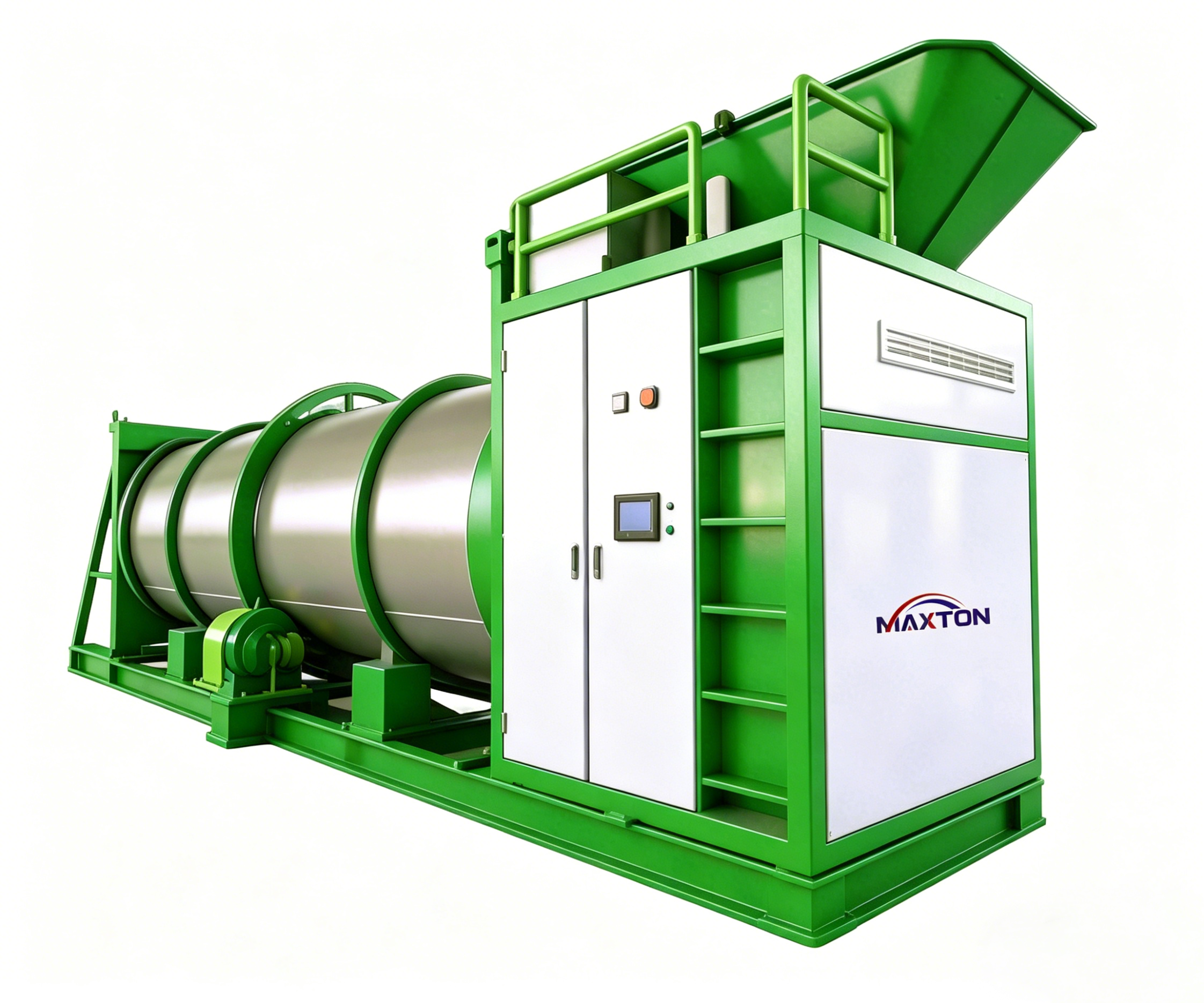
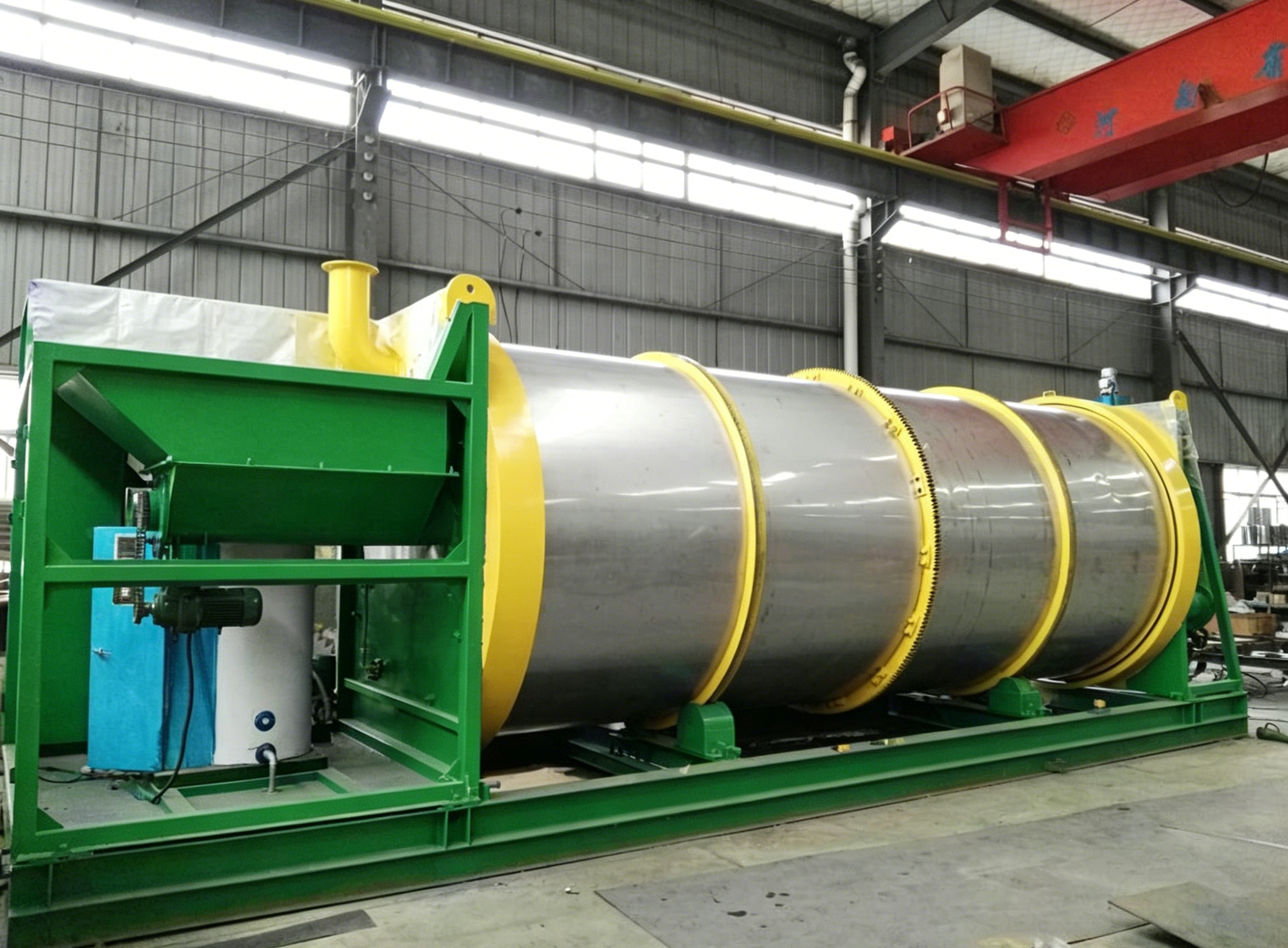
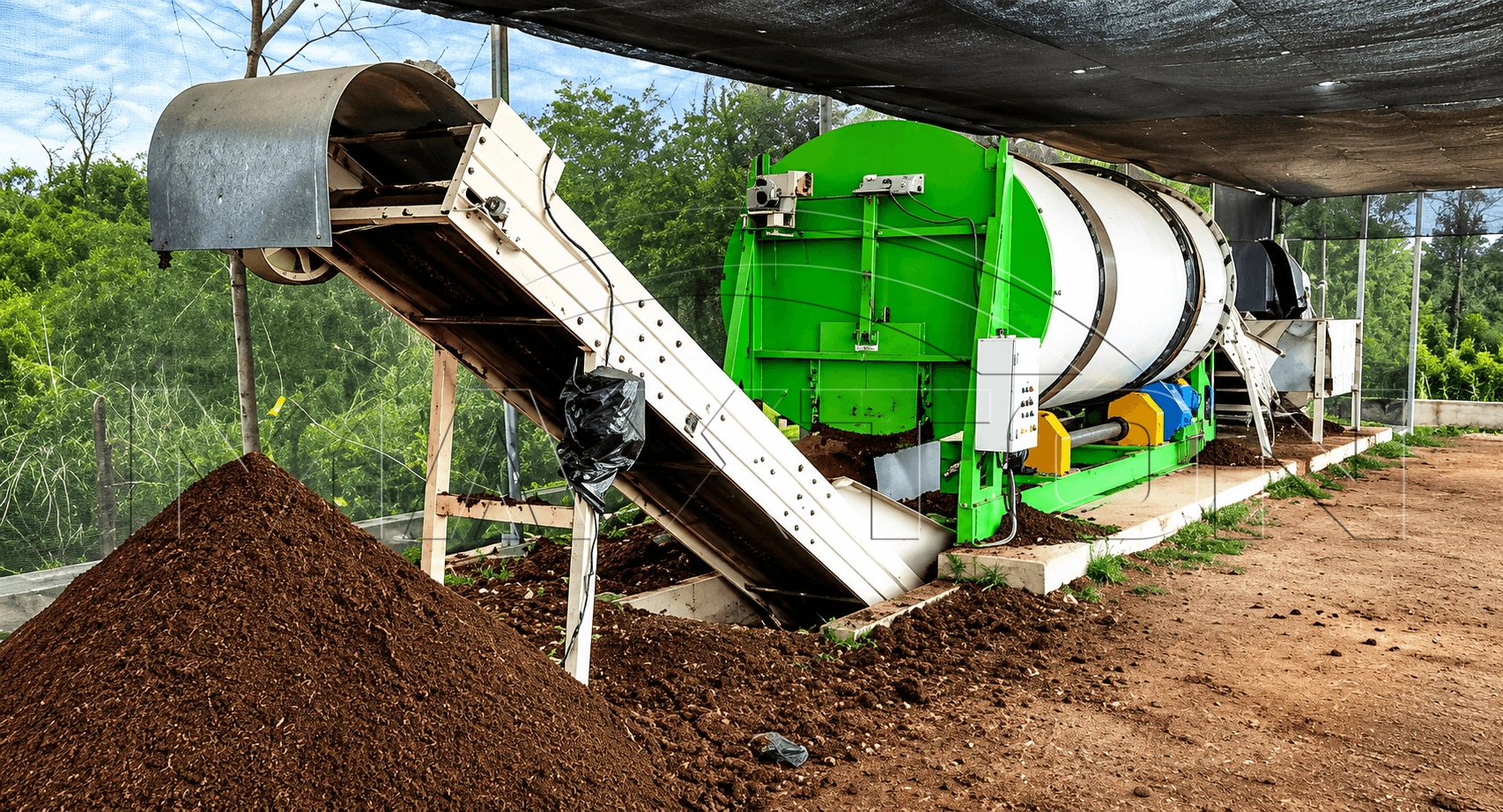
The MAXTON rotary drum fermentation tank is a fully enclosed dynamic composting system that breaks through the limitations of climate and site conditions. Using a horizontal rotating drum with specially designed internal flight plates, combined with a precision forced aeration system, it creates an optimized environment for aerobic thermophilic and thermotolerant microorganisms to thrive.
The horizontal drum integrates solid waste mixing, aerobic degradation, temperature/humidity control and exhaust gas collection in one enclosed vessel. Drum rotation with internal flight plates tumbles material for uniform aeration, while built-in sensors maintain optimal 55–70°C fermentation temperatures.
Dynamic tumbling and forced ventilation combine to accelerate microbial decomposition. Aerobic fermentation completes in just 7–10 days, reducing material moisture from 60–80% down to 30–40% — ready for direct granulation or sale as stabilized organic fertilizer.
The horizontal compact design saves 70%+ land area versus traditional windrow composting. The drum body is wrapped with 50–100mm polyurethane insulation, enabling normal high-temperature fermentation even in -20°C winter conditions.
The equipment handles a wide range of high-moisture, high-organic-content waste materials.
Chicken manure, duck manure, pig manure, cow dung, sheep manure and other high-moisture animal waste from poultry and livestock farms.
Crushed straw, mushroom compost residue, rice husk, branch chips, sugarcane bagasse and other crop biomass waste materials.
Municipal sludge, kitchen waste, food processing plant scraps, sugar mill filter mud, paper mill sludge and other organic solid waste.
Fermented output can be processed into high-quality refined organic fertilizer with high nutrient content and excellent soil improvement properties.
Stabilized compost serves as an ideal substrate for adding beneficial microorganisms to produce bio-organic fertilizer products.
Direct field application as soil conditioner, nutrient soil for landscaping, land reclamation and ecological restoration projects.
After startup, raw material enters the horizontal drum through the feed inlet. The drum rotates slowly under a variable-frequency motor drive. Specially designed internal flight plates continuously lift material and drop it, creating a cascading "curtain" effect that maximizes gas-solid contact area. Simultaneously, a high-pressure centrifugal fan forces fresh air into the drum through the main shaft or bottom ventilation pipes.
Aerobic microorganisms multiply rapidly in the oxygen-rich environment, decomposing organic matter and releasing substantial biogenic heat. Internal temperature quickly rises to 55–70°C, which not only accelerates moisture evaporation but also thoroughly destroys pathogens, parasite eggs and weed seeds. Exhaust gas is extracted by an induced draft fan into the deodorization system for compliant discharge.
Dynamic tumbling combined with forced ventilation achieves complete aerobic fermentation in just 7–10 days — a dramatic improvement over traditional windrow methods requiring 30–90 days.
Fully enclosed negative-pressure operation with dedicated suction ports. Exhaust gases are channeled to chemical scrubber towers or biological deodorization filters for complete compliance.
Highly integrated horizontal design requires 70%+ less land area compared to traditional trough composting systems. Ideal for space-constrained facilities near urban or residential areas.
The core technical challenge of the horizontal rotary drum design lies in the "dynamic balance of mass transfer and heat transfer". In static composting, the center temperature is too high and easily causes microorganisms to "burn out," while the edge temperature is too low to achieve sterilization. The MAXTON rotary drum fermentation tank overcomes this through precision fluid dynamics design — air forms uniform micro-positive-pressure penetration (maximizing Oxygen Transfer Efficiency, OTE) through the pores of the tumbling material. Additionally, the internal flight plate angles have been optimized through multiple mechanical simulations to ensure material forms a loose cascading "curtain" when falling, maximizing gas-solid contact area. This design not only guarantees absolute uniformity of the internal temperature field but also effectively prevents caking of high-moisture materials.
In commercial fertilizer production lines, the rotary drum fermentation tank serves as the core front-end preprocessing stage. Its advantages include:
The core of producing high-quality organic fertilizer lies in the degree of humification. This equipment uses precise probes to monitor real-time data inside the drum:
As a leading organic fertilizer equipment manufacturer, we often see facilities struggle with these three issues when trying to scale up their operations.
The Problem: Attempting to compost pure chicken manure (nitrogen-heavy) directly leads to massive ammonia loss, foul odors, and toxic compost.
The Solution: Our engineers provide precise blending formulas (adding sawdust/straw) to achieve the optimal 25:1 Carbon-to-Nitrogen ratio before entering the rotary drum.
The Problem: Traditional static piles suffer from "cold edges" and "oxygen-starved cores," leading to incomplete sterilization and hydrogen sulfide production.
The Solution: The MAXTON internal flight plate design creates a continuous "falling curtain" of material, ensuring 100% uniform forced aeration and consistent 60°C+ temperatures.
The Problem: Heavy rain or sub-zero winters can halt open-air windrow composting entirely, disrupting supply chains.
The Solution: Our enclosed rotary tanks feature 50-100mm polyurethane insulation. The exothermic microbial reaction sustains high temperatures inside the drum, ensuring 365-day operation regardless of external weather.
Watch the full operational workflow of the MAXTON system processing high-moisture organic waste.
| Category | Drum Volume | Daily Processing Capacity | Application |
|---|---|---|---|
| Small Standard | 10–30 m³ | 3–10 tons/day (5–20 m³/day) | Small to medium livestock farms, on-site processing |
| Medium Mainline | 50–100 m³ | 15–35 tons/day (30–80 m³/day) | Regional organic fertilizer processing plants |
| Large Custom System | 150+ m³ | 100+ tons/day (100+ m³/day) | Municipal waste centers, large agribusiness groups |
| Parameter | Specification |
|---|---|
| Fermentation Method | Enclosed high-temperature aerobic microbial fermentation |
| Fermentation Temperature | 55°C – 70°C (high-temperature phase) |
| Fermentation Cycle | 7–10 days |
| Optimal Feed Moisture | 50% – 65% |
| Optimal C:N Ratio | 25:1 – 30:1 |
| Moisture Reduction | From 60–80% down to 30–40% |
| Insulation | 50–100 mm polyurethane foam / ceramic fiber blanket |
| Control System | Siemens PLC + HMI touch screen + mobile APP remote monitoring |
| Odor Control | Enclosed negative pressure + chemical scrubber / biological deodorization filter |
How does an enclosed rotary drum composting vessel compare with traditional windrow and static pile methods?
| Comparison Item | Rotary Drum Fermentation Tank | Traditional Windrow Composting |
|---|---|---|
| Fermentation Speed | 7–10 days (enclosed aerobic) | 30–90 days (natural decomposition) |
| Odor Control | Enclosed negative pressure + scrubber/biofilter | Open-air, difficult to control |
| Automation Level | Siemens PLC full automatic + APP remote | High manual labor, frequent turning required |
| Land Footprint | 70%+ less land than windrow | Large composting yard required |
| Weather Dependence | All-weather (-20°C operation with insulation) | Severely affected by rain, cold, wind |
Every MAXTON fermentation tank is engineered through rigorous calculations including raw material analysis, thermal calculations and mechanical load verification. Our design philosophy is "standardized core + flexible exterior" — core structural components (support rollers, gear rings, seals) use high-standard industrial mass production for stability and cost efficiency, while feed/discharge methods, insulation levels and anti-corrosion requirements are fully customized per project.
Inner liner available in 304/316L stainless steel or polymer anti-corrosion wear-resistant coating for acidic, alkaline or high-salinity materials. Outer insulation available in various thicknesses of polyurethane foam.
Optional Siemens PLC touch screen integrated control system with mobile APP remote monitoring for real-time viewing of temperature, humidity, oxygen concentration and drum rotation speed.
Custom automated feeding elevators, shaftless screw discharge conveyors and biological deodorization towers configured to match specific plant layouts and site conditions.
In the organic solid waste treatment field, no two batches of material are identical. For example, egg-laying hen manure and broiler manure differ significantly in moisture content and C:N ratio. After mixing different proportions of rice husk or sawdust, the material's porosity and bulk density change dramatically. Deploying large equipment without testing can easily result in motor overload, internal anaerobic odor generation, or insufficient moisture reduction.
Pilot-scale testing is therefore the cornerstone of project success. MAXTON's pilot laboratory determines:
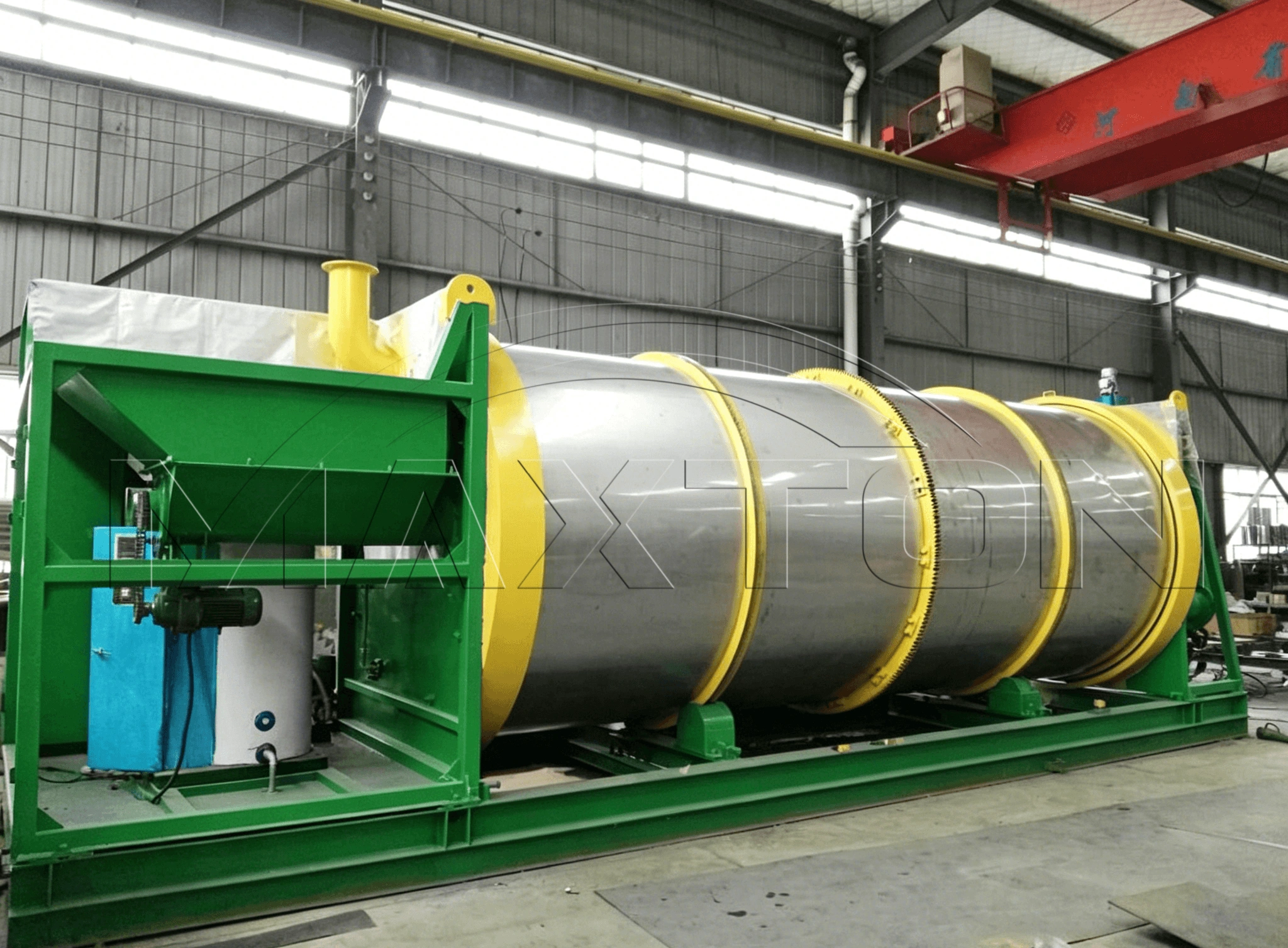
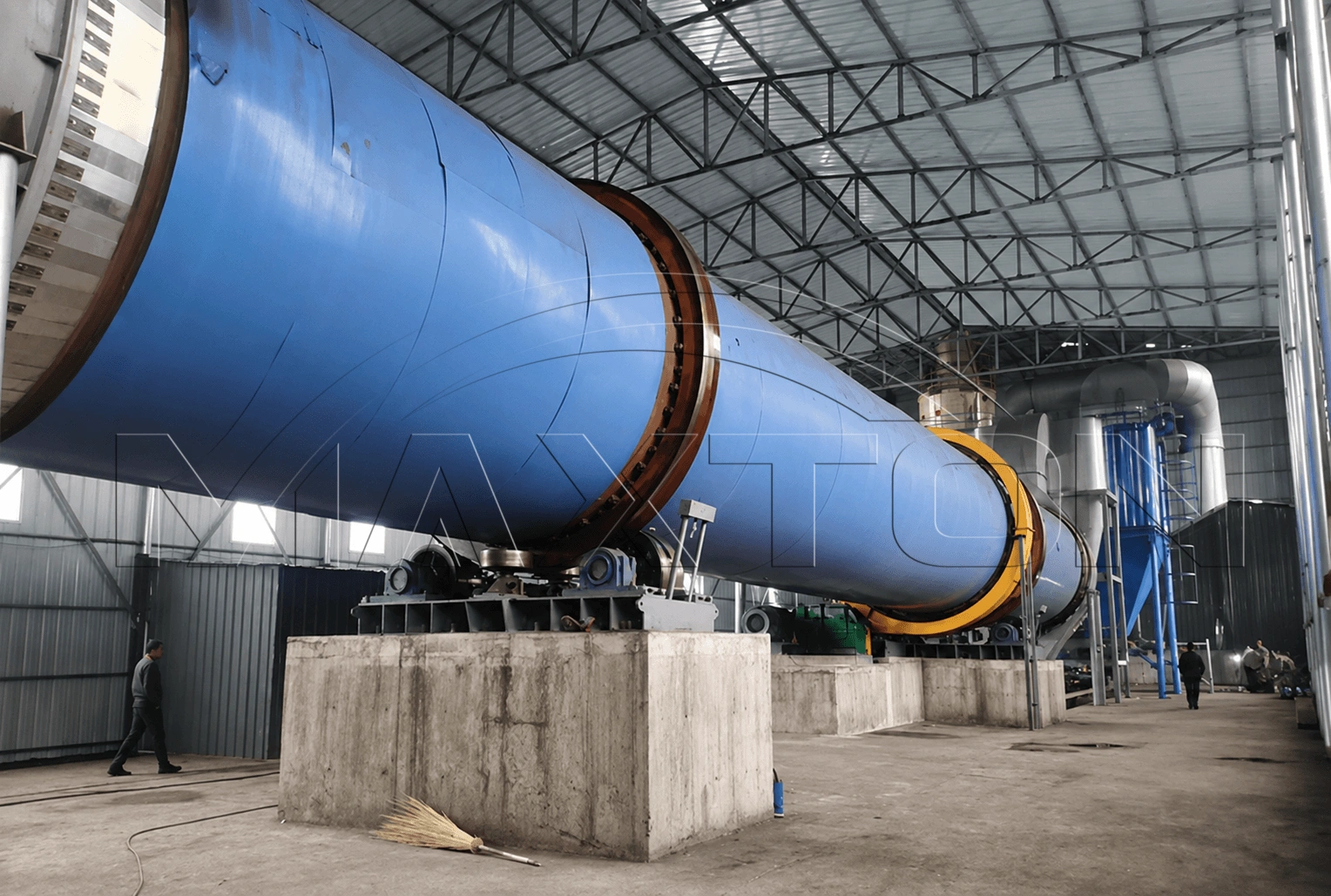
See how modern farms and waste management facilities are achieving profitability and environmental compliance with MAXTON equipment.
Comprehensive answers to the most common technical and operational questions.
A rotary drum fermentation tank is an enclosed horizontal composting vessel that integrates solid waste mixing, aerobic degradation, temperature/humidity control and exhaust gas collection. It uses drum rotation with internal flight plates to tumble and aerate organic waste, combined with forced aeration, to achieve rapid aerobic fermentation in 7–10 days.
High-temperature aerobic fermentation typically takes 7–10 days depending on raw material type, initial moisture content and ambient temperature. The enclosed system maintains temperatures of 55–70°C throughout, compared with 30–90 days for traditional windrow composting.
Yes. The equipment operates under fully enclosed negative pressure. Exhaust gas is drawn through dedicated suction ports into chemical scrubber towers or biological deodorization filter systems. The treated gas fully complies with national and regional environmental emission standards.
Professional high-temperature aerobic fermentation inoculant is recommended only during initial commissioning. Once the system enters normal daily operation, the drum retains a large population of highly active thermophilic bacteria, so additional inoculant is typically unnecessary, significantly reducing operating costs.